Monday, 15 February 2010

Climate Change: More than just hot air


“Thank God men cannot fly, and lay waste the sky as well as the earth” 
Turns out we proved David Thoreau wrong, and didn’t need wings to ruin the planet. 
The divisive topic of climate change was once again on the agenda at the start of the month, with new evidence coming to light of hacked emails at the University of East Anglia. Commentators have all thrown their hat into the ring; the main sticking points are whether the new evidence has been taken out of context, and if there is any truth in the ranting of climate sceptics. 

The main flaw in the debate is the notion of absolutism. Climate change is perceived to either be real, or a fallacy. You either believe in it, or you don’t. Such a debate (if it can be called that) is not only strongly irrational, but fundamentally damaging to the notion of progressing to a better understanding of climate change. To the uninitiated, the climate change community seems a hotbed of exclusivity and reactionary tendencies. Any notion of criticism directed towards environmentalists is inevitably met with a call to arms, lest you even think about criticising the movement. 
Such a refusal to allow analysis and self criticism means that they keep the stigma of being something only of relevance to the chattering classes. It's unfortunate that public figures who champion the green movement are almost without exception seen to be elitist (Messrs Goldsmith, Monbiot and Prince Charles). The combination of a ubiquitous green lobby and the topic being adopted as de rigeur by Westminster means that any dialogue sounds like white noise. That it's been trumpeted in the liberal media as a catastrophe waiting to happen also does little to help the situation. Bombarding the public with yet more studies and statistics only has the effect of disenchantment, further stalling any progression to universal understanding. 
This universal understanding is key to the development of environmental policy of the future. Polls show that in the UK we have a fairly good understanding of climate change issues- we are aware that it exists and are definitely more concerned about it than many other countries. 
Contrast this with the United States (still emerging from the Bush administration of denial) and the blank refusal of China to co-operate at the Copenhagen summit to see that we still have a long way to go to achieve a global plan. Scientists have been given the benefit of the doubt for too long. If you read the hacked emails that caused this latest farrago in the UK, they are mostly taken out of context and of little real significance to question the effects of global warming. 
But that doesn't excuse politicians for raising scientists onto an unaccountable plinth. 
Climate change is a problem. We know this. But what can't happen is to let urgency cloud judgement. Facts need to be checked, studies carried out and cross referenced, and scientists know this better than anyone. The Intergovernmental Panel on Climate Change forecasts a rise in sea levels between 90mm and almost a metre. Hardly a paradigm of accuracy and diligence. There is much written about misinformation, bias and skulduggery in the media. But what about the green movement? Surely they, like everyone else, are equally fallible? I'm no climate sceptic, but am tired of the halo bestowed on the green movement. 
Where can students fit in with all this? Do your research. Most people take in information passively, letting other people make decisions for them. Individual empowerment is something that is scarce within the student population. 
I've lost count of the amount of hoops I've had to jump through, despite "independent learning" being a university's main ultimate selling point. A culture of being patted on the head, bombarded with "yoof" television and demonisation means that it's a lot better to go and get the information yourselves. Read the literature for and against, and make your own minds up. Then, and only then, can we start to properly compare, contrast and analyse the theories, and maybe it won't seem quite so dull after all. 

Monday, 8 February 2010

Labour's Failure on Education


“Education, education, education”
This was the mantra with which Tony Blair began his first term as Prime Minister, as Labour campaigned to bring classroom excellence to the top of their political agenda. 
Over the next few months, Gordon Brown and Ed Balls will start blitzing the public with endless rhetoric about how education still remains this government’s number one priority. What’s that? A general election on the horizon you say? How fortunate.
But have Labour succeeded since election and three successive terms? There’s no doubting the level of money invested (doubling spending from £29bn in 1997, to £63bn in 2007) but moreover, have funds been spent wisely? Core “per pupil” funding has risen by 55%, while there are now in excess of 35,000 more teachers than ten years ago. 
Initially, in the few years after Labour’s election in 1997, exam results soared, ministers patted each other on the back, and Cool Britannia seemed to be talking the talk, at least. But then a major flaw reared its head. The reason for the rise in exam performance was that teachers were now teaching students to the test. After this initial flourish producing better results, the marks fell into a lull. No more could be done to improve results, as teachers were still working from a rigid structure that was performance based. 
Now teachers feel helpless when they face classes made up of a whole array of different abilities. There is no flexibility, and the national plan dictates that the teachers move on with the lesson, no matter how many children are left behind. I remember in my own school, a despairing teacher saying he’d love to discuss abstract concepts and literature, only to concede “it’s not on the syllabus”, and continue handing out past papers. Children are no longer being taught subjects. They are being taught to pass an exam. Cramming information into the brain during revision and then regurgitating it onto paper, without little idea of context or any real relevance. How can we hope to impassion young people about the arts and humanities, when the very nature of the education system is so sterile?
Labour have turned what should be a bottom-up system into a top-down structure. We need to start nurturing children at the earliest age possible, not throw them into a world of bureaucracy and exam neurosis. By the time so called “problem children” reach secondary school, it’s often too late for teachers to help them. By starting the process of encouraging free and unrestrained learning earlier, we can reduce the chances of encountering stumbling blocks later in life.
Despite all this, of late the focus has not been on primary and secondary education, but higher education. 
Labour set the bar high, with a target of getting 50% of young people into higher education by 2010. They’ve come extremely close, with recent figures showing 47% of people aged 18-25 are in higher education. But has it really reaped rewards? The government line is that getting more people into university is more important than ever to secure the country’s future and the health of the economy. 
But the failings lie in projecting such an exact figure for getting young people into higher education. University applications have gone up dramatically, but that doesn’t mean they’ve produced more industrious and independent graduates. Having an undergraduate degree has now become the bare minimum for most job applications. By proxy, anyone wishing to pursue their dream career must attend university. Furthermore, people who shouldn’t be at university are being encouraged to apply, so determined are Labour to reach that magical 50%. These are not students being equipped for the world of work. These are students attending university because they’re told they have to. All the hyperbole built up around “the best years of your life” has resulted in the myth that university is a must-have, to add to the list of things you do before you die. But it’s a lose lose situation. Opt out of applying, and you risk encountering prejudice and snobbery whenever you file a job application. Apply, and you enter a market over saturated with graduates, all with the added gift of thousands of pounds of debt. 
Labour cannot be accused of under-spending on education. But a mismanagement of finance and an absurdly rigid targets-based organisation can be laid at their feet as a gross failure. Throughout the system, from primary through to higher education, staff are encouraged to always meet the goals set, no matter what. This doesn’t take into account individual cases, “difficult” year groups, and other arbitrary factors. All it results in is a disillusioned workforce and a student population who don’t really know what they want to do, or how to get there. Whichever party wins at the next election, they must think long and hard about how to tackle education, and learn from the shortcomings of this government. 


This article originally appears in the February 2010 issue of Chartist Magazine

Tuesday, 19 January 2010

iSlate ... you mean you haven't heard?


After months of bloggers foaming at the mouth, Apple have finally scheduled a press conference for January 27th, to unveil their "latest creation". The iSlate, as it's rumoured to be called, at it's best could revolutionise the way we read newspapers and books, the way we interact with social media, and simultaneously save the dying newspaper industry.

While all this is unlikely, the iSlate still poses intriguing questions about where the future of publishing and media is headed. We're increasingly dependent on having access to news 24 hours a day. The news and media junkies amongst us aren't content with reading what happened yesterday in the morning paper. We want to get updates on world events as they unfold, with live analysis and documentation. The emergence of smartphones (see previous blog post) has further enabled us to have access to news wherever we are.

So, what can we expect from the iSlate? My estimate is a mix of ingenious social networking applications, the ability to read newspapers and books with remarkable clarity, a wide range of TV, music and film applications, as well as all the normal iPhone perks. The New York Times is currently on the cusp of announcing an online paywall akin to the Financial Times', and there's speculation that the announcement will coincide with Apple's own unveiling. If publishers and newspapers sign deals with Apple, it's sure to bring in some extra revenue to keep news corporations afloat for awhile longer as they try to figure out how to make journalism pay.

It's interesting how Apple's marketing team approach all upcoming releases. Everything is clandestine until the very last minute, with only select bits of information leaked to the public. As a result the rumour-mill goes into overdrive, pre-release hype reaches a zenith and Apple clean up at the sales. For all the abuse hurled Apple's way (smug, overpriced, style over substance) they have a loyalty in their fanbase that other companies only dream of. One can't imagine the same amount of column inches and middle-class chatter dedicated to the release of the latest version of Windows.

At the moment, Apple are reported to be in talks with several mobile phone operators in the UK to close a contract deal. It's expected to offer the same kind of service that mobile networks offer for mobile broadband deals, offering discounted products at the expense of a long term contract. Price speculations are wavering around the $1000 mark, which means that we're likely to get a price close to the basic Macbook here in the UK. Currently, I don't see any point in owning a smartphone, a powerful laptop, and the iSlate. Nonetheless if you just like using your phone to just phone people (what a bizarre idea!) then I think the iSlate would be a worthwhile investment.

Anyway, it doesn't matter what I think. We've got a week to go until the announcement, after which Steve Jobs' plan on world domination will be complete. 

Still, better him than Simon Cowell.


Thursday, 14 January 2010

Shiny Happy Phones

Currently, I'm looking for a new phone. My present mobile phone is languishing an inch away from suicide, much like John Travolta I imagine, it's best days definitely in the past. So I've started feverishly researching, because frankly, any option that isn't covered in the world of technology scares me.

Until a couple of years ago this would've been all academic to me. Technology enthusiasts seem to operate in a strange little world reserved also for the likes of model army fanatics. A trip to the Carphone Warehouse is equivalent to treading along the alleys of a rough part of town. I just want to get out as soon as possible. The veneer of the displays and the shiny nature of the employees both dampens and numbs my spirit. Any encroachment into this world both baffles and pressurises me, the outsider.

This all changed with the iPhone, and latterly, the newfound consumer popularity of Blackberry. The iPhone, far from being the best phone on offer now, certainly allowed us who weren't knowledgeable about megapixels and social networking (otherwise known as talking, in the old tongue) to feel confident we had something in the palm of our hand that was both usable and powerful.

I'm enthusiastic about the iPhone. It's an exquisite piece of design and put simply, it works. Blackberry's popularity I'm not so sure of. Blackberry's appeal with the business client was that it pushed email directly to the phone, on the move. Work emails could be addressed there and then, without the need for manually checking back to a web browser every so often. Add to that improved internet use, 3G, etc, and you have the makings of a smartphone. However, Blackberrys do none of the aforementioned better than any competitor. Web browsing is unimaginative, screens are small, and menus often cluttered. Take away the email and you're left with an average, or at best "decent" phone. Why it's taken flight amongst students and the under 25's I have no idea. Do you really get any emails more important than "Uni Qlo sale now on! Viagra Pills Available Now! Your Amazon order has been dispatched"? The answer for must of us is no, and therefore negates the need for a Blackberry. My suspicion is that more and more people buy them as they see peers getting them, and so the popularity snowballs...

So back to my predicament. I'll keep looking for a phone, now that there's less trepidation in my step when approaching the mobile phone store. I'll try not to stare blankly as a salesperson offers me the benefit of "3 months half price". I'll listen to his or hers dulcet tones. And eventually I'll depart from said emporium with a shiny bit of plastic, which will be obsolete in 6 months. This is progress.


Sunday, 27 December 2009

Film: Avatar

A rumoured $350 million production budget. James Cameron's first film in 12 years. The invention of an entirely new camera to facilitate filming.

To say that Avatar has been suffering from pre-release hype would be to put it mildly. James "King of the World" Cameron has hailed it as a masterpiece, the template for which all future film-making will take it's cue. I finally got to see the spectacle tonight, and one word summed it up: Underwhelming.

Before I get assailed by legions of fanboys who seem to track Cameron's every waking movement, let me first say that Avatar succeeds to some extent. The 3D technology and clarity of definition is certainly impressive, as is the imagination Cameron to create the world of Pandora.

Unfortunately, that's where the good news runs out, as we are subjected to a turgid storyline, clunky script and woefully predictable action sequences. For a film that has been announced as groundbreaking, Avatar does nothing new. The Matrix's bullet time technology was so fascinating that we'd never seen it's like before. Avatar rehashes action film clichés again, and again, and again. If this is the future of film then I'm worried about the direction that cinema is headed.

We have the peaceful Na'Vi of planet Pandora set upon by the human military, in order to get a precious stone which is worth untold millions of dollars. Parallels drawn with the American war on terror are easily made, with the words "shock and awe" actually making it into the script. Besides some occasionally stunning visuals, the animation fails to convince at every turn. The reason why Lord of the Rings was so successful is that it triumphantly married two worlds together. On one hand, the skilful artifice of computer technicians at Weta Workshop, creating monsters which both looked ferocious but intriguing, mythical but somehow realistic. The animation had a lived in quality. Beasts were animated to look dirty, tired and look as though they were battle-hardned. On the other hand, we had real depth of character in each actor and a realistic effort was made to develop and explore storylines.

Avatar does none of this. The world of Pandora looks too perfect, it's edges too smooth, and it's people with no sense of realism at all. Likewise, it's proof that CGI effects and explosions are no substitute for old fashioned storytelling. James Cameron certainly knows how to throw the kitchen sink at a production budget, but there's little evidence here of any craft or diligence to create a good plot.

I wanted to love Avatar, I really did. But it's such a pristine and squeaky clean looking film, that there's no emotional heart to it. Like both Transformers films before it, one simply can't get over the fact that you're watching a computer game, a collection of graphics and a dull, uniform battle scene.
 I didn't care about any of the main characters, be they bad or good. Even Sigourney Weaver fails to save the day. This type of film normally relies on its hero being a maverick, slightly out of his league, or wise-cracking. Jake Sully, Avatar's central character, is none of these. He's an uncharismatic paraplegic marine, who you simply don't believe when he's in the middle of delivering a cod-inspirational speech (in the same league as Leonidas's "This is Sparta" tirade. That bad, honestly).

Avatar is guaranteed to be a box office smash. Perfectly timed in order to lap up the Christmas holidays market, it's set to be a big draw. Indeed the London Imax is sold out until January 11th for every single screening. All I can ask is don't part with your money to go and see this trash, it simultaneously fails to be anything revolutionary, whilst not even offering mindless entertainment. It bored me. How sad.


Thursday, 3 December 2009

Avoidance Tactics? - Business as usual re: Afghanistan

It's remarkable how some people in power either ignore, or refuse to see things which are staring them straight in the face.

This was the prevailing theme today when myself and an audience met with Ivan Lewis, Minister of State for Foreign and Commonwealth affairs. The topic on the agenda was primarily the war in Afghanistan, the logistics, ethics and practicalities involved in such a war. Lewis spoke for around a quarter of an hour before opening it up to the floor for questions.

It's here when I'm going to check myself slightly. I am constantly defending politicians against others' insults. For every expenses abusing, sleaze ridden corrupt cabinet minister, there are constituency MPs who work hard for their electorate, and want (to use a cliché) "to make a difference". But given the responses supplied by Lewis today, can you blame young people for feeling disenfranchised and apathetic about politics? Typical politicians answers were given, instead of answering the question directly, policy was trotted out with all the panache of a Michael Howard Newsnight interview. The audience looked on incredulously as good, constructive questions were left unanswered.


Lewis is currently on a roadshow (his own words) visiting every region in the UK to stir up support for the war in Afghanistan, to "assure forces that the British people support them". I have no doubt that the British people support them, but their ringleaders...I'm not so sure. Lions led by Lambs indeed.

Furthermore, Lewis constantly emphasised that we were in Afghanistan to rid the world of the greatest threat to our way of life. It would be churlish to point out the not-insignificant problem of climate change as our greatest threat, but you can't have everything. For a man so clearly preoccupied with the modern threat of terrorism (Lewis voted for the Iraq war, for ID cards and against an investigation into the Iraq war) he seemed stupendously blind to it's root causes. Much of the argument seemed to take the view that we stamp out any insurgents in Iraq and by proxy safeguard our own country. What he fails to take into account is that much of the terrorist bombings in the UK (including July 7th in London) were propagated by British residents. How exterminating members of Al-Qaeda 3000 miles around the world is going to help us, I don't know.

Moreover, he incessantly referred to the British people being in a state of fear as "the security of the people of this country lay in the hands of extremists". Have I ruptured the space-time continuum into a Daily Mail alternate reality? I've yet to meet a single person who is genuinely worried about the threat of terrorism to this country. It's happened before, but the chances of you being in the wrong place at the wrong time are so minute that it's hardly worth thinking about. Did people stop using the Tube when London was under threat? No, because they had to get on with their lives and it was business as usual.

Towards the end of the talk we were bombarded with statistics showing "improving" living conditions in Afghanistan. Much has been made of the effort to rebuild and reinvigorate Afghanistan. While this may be true, it still doesn't explain the fundamental point of the whole debate:

Why are we there in the first place?

Sunday, 22 November 2009

Higher Education - For Everyone?


So, Lord Mandelson, Prince of Darkness, Secretary for Business, and now, apparently all round “good guy” unveiled his higher education policy at the beginning of this month. 

Entitled ‘Higher Ambitions’ , the framework set out a more science and technology based system, where the aforementioned sectors would be given priority with regards to funding and access.

It’s here when my position as a left leaning liberal is called into question. Mandelson’s idea is to brand universities with the same kind of traffic light system that you find on ready meals, defining their calorific content and fat etc. He wants to further expand the idea of universities as a brand. While there’s no getting away from it, universities are a business (Trinity College Cambridge recently bought the O2, no doubt), I think that this is a step too far. I find myself more in tune with the Conservative Policy than Labour on this one.

On the party website, Labour declare that “more young people are attending university than ever before”. That may be so, but does that take into account whether these extra people should be at university at all? ‘Going to Uni’ is the cool thing to do right now, and has become less a thing to aspire to, than part of the status quo. What this leads to is a huge amount of university students who really shouldn’t be there at all. Their skills are far more suited to apprenticeships, which have died out in current years, and which the Conservatives pledge to bring back. 

University is a place for someone to learn, grow in knowledge, and then hopefully apply the skills learnt into an increasingly competitive job market. What Labour has done, is create an entire new class of university student. That is, who floats through their degree course, not really paying much attention, graduates, and then is suddenly lumped with thousands of pounds of debt, but crucially, without having benefited from the university system. On the whole these people would be better suited to learning practical skills. The whole reason why Polish plumbers have become an in-joke is because there are no native plumbers to fill the ranks. We now expect people to go to university, when in fact we should be taking individual cases into consideration. A huge amount of self-made entrepreneurs never went to university, and I doubt any of them regret it. We need to see what suits the individual, rather than applying generalised conventional wisdom to everyone.

That said, I still believe university in this country offers a good service for the fees paid. Tuition fees, although obviously higher than in years past, are still cheaper than the cost for one term attending some private secondary schools. A lot of it is down to how you use it. Use the facilities, books and lecturers that are on hand to offer support. More and more, it’s becoming clear that it’s what you do outside of compulsory work that counts, rather than within it. 


Monday, 16 November 2009

Era of mass miscommunication

So, we're nearing the end of 2009. By the end of 2010 it'll be 10 years since all the hassle about the Y2K virus, remember all that? The terror that threatened to bring civilisation to a standstill because the ticking clock wouldn't be able to handle the date ending with "00".

Computers and technology back then were a contradiction. On the one hand, they were innocent compared to todays powerful behemoths. Slow chugging processors powered us through cyberspace, and hard drives were filled up by the presence of one or two games. Dial up internet gave particularly sinister access to the internet, I always thought it sounded like a character from Doctor Who being murdered in an air shaft. However, on the other hand, computers were endlessly more frustrating and jargon based than they are now. To us "normal" people, techies like to make computers deliberately complicated, in order to keep their kudos, and moreover, their jobs. Web 2.0 has democratised and de-cluttered the internet, to the extent that even an idiot like me can make an online magazine: http://thefzine.com

Of course, "social networking" "micro-blogging" and the rest of the idiot terms applied to Web 2.0 do come at a price. That is, it's a lot like a lifetime membership. Once you've signed up, it's very difficult to get away.

Take this example: I must be one of the only people in my age group to not watch The X Factor, judging by the endless Facebook updates. Opting out of watching the program isn't enough anymore. One has to turn off all radios, computers, phones, and just about any other piece of technology that looks shiny enough to pick up a signal to get away from it all. Instead, idly minding my own business, I cheerfully click the "refresh" button on my browser. Suddenly I'm hit with a torrent of updates:


"can't actually believe that jedward are still in xfactor!!!!!"


"JEDWARD!!!!!!!!!!!!!!!!!!!!!!!!!!!!!!!! whhayyyyyyy" 


"hope lloyd goes!"


I remember fondly when my dad would coincide his bike rides with England's efforts to progress through the World Cup. Time after time, the streets would be deserted as he joyfully cycled around in peace for 90 minutes. Whenever there was a penalty shoot out he got an added bonus. A few years ago, I could've been him. I could've turned off the television when Simon Cowell and his Will Smith circa '91 haircut hove into view, and that would've been that. Now because I've signed up to a whole range of mailing lists, networks and websites, I have to turn all of those off aswell. "But that's your fault!" you're screaming at the screen. Yes, of course it is, but do people really have to tweet and exchange such bland information? If the technology is there for Alan Rusbridger to tweet about Trafigura and overturn an injunction, it's a massive waste of resources if we're using this to talk about deluded fools singing their hearts out with all the melody of an irate chimp.

Essentially the banter which was previously only privy to the seats at the back of the bus have been brought forward onto the internet. Meaningless chat and general idiocy dominate the feeds. I'd love it if people thought before typing a bit more, but what can I do about it? Simply watch the conversations unfold, and subscribe to the X Factor Twitter page...


Thursday, 5 November 2009

Red Hill, the border of England

To visit Penrith, Cumbria, is to visit one of the loveliest market towns in the UK. The town centre is based around the market square and shops are housed in hardy Georgian buildings, similar to Lancaster.

Checking through a newsagent, I was taken aback by the amount of local media. Granted, there were a lot of Have I Got New For You-worthy publications like Farmers Guardian but so too were there multiple local newspapers, including the Cumberland and Westmoreland Herald which unusually, came in a broadsheet format.


Leafing through these publications, one article kept popping up, the mass opposition to a huge Sainsburys superstore. The proposed development is due to take place in the southern part of Penrith, but there is massive local opposition. Talking to a salesman in the excellent Gents Outfitters, Arrnisons, it became clear that Penrith is proud of its stoicism in the face of chain stores and the endeavours to keep independent shops viable. Admittedly, Penrith has a branch of Morrisons, but it is outside the town centre, and small compared to the 98,000 square feet store proposed by Sainsburys. He went so far as to say that the new development would "kill the town centre" and that the sense of community created by close knit shops would be lost. Unfortunately the council seem to be in favour of this new development, but there is an open meeting at the Town Hall on 12th November where locals can voice their opinions.


Enough of the doom and gloom, as Penrith has so much to keep you occupied. The aforementioned outfitters is magnificent. Don't come here looking for the new deconstructed avant-garde jacket by Junya Watanabe, because you won't find it. What you will find is traditional high quality men's formalwear, excellent service, and a brilliant selection of shoes. All the "classics" boxes were ticked, with chelsea boots, brogues, desert boots and oxfords, on sale in a variety of styles and colours. Hats were available in a range of measurements which were all catered for.  No wonder the men of the town dress so sharply when such an excellent shop is on their doorstep. The service is helpful, knowledgeable, and crucially, unintimidating, which will allay most men's fears about clothes shopping.


Pop across the square from here and you find the excellent delicatessen, J&J Graham. I wish I'd managed to stay longer but they were shutting by the time I arrived. What I did garner is that it had a mouthwatering range of cheeses, meats and freshly ground coffee on sale, as well as a vast selection of preserves and wine. It was impressive to find a shop like this so busy just before closing time, especially with the supermarket on the outskirts of town. A revisit is surely in order to pick up some treats for Christmas.


My final pick of the town is the Lonsdale Cinema, a two screen cinema built in 1910 in the city centre, adjoining a bingo hall. While it showed the typical multiplex fare of mainstream films, it was lovely to see the original building had been kept whilst having a modern interior. Sunday afternoons are host to the "Alternative" showing, which this week was Pedro Almodovar's Broken Embraces.


Penrith is only 20 miles from Carlisle. A quick google shows that it takes next to no time to come south from Scotland down to Penrith, nor does it take long if you live in any other part of the north west. It deserves a visit, and any money that can be put in the pockets of local retailers rather than money hungry supermarkets is much appreciated. The people of Penrith deserve better.


Image and video hosting by TinyPic


Tuesday, 27 October 2009

"I'm trying real hard to be the shepherd"


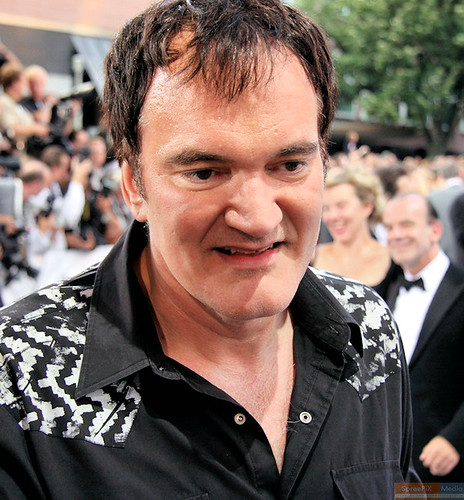
So, I think this could prove to be controversial. At least, to the one internet drifter who happens to stumble across my small hut in cyberspace. Quentin Tarantino has lost it. There, I said it. While film critics have largely been saying this for the last six or seven years, it seems that I'm very much in the minority with this view when it comes to people in their twenties.


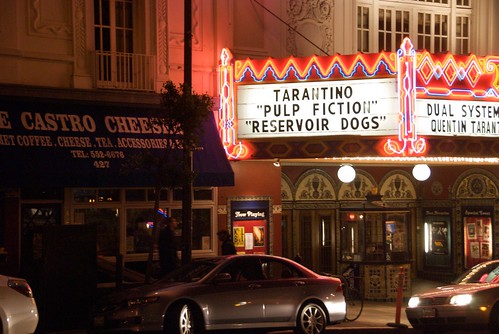
This is not an all out attack on QT, this is a study of a man who had something special, and then squandered it. There is no doubt in my mind that he has made three excellent films. Reservoir Dogs, Pulp Fiction and Jackie Brown all stand out as triumphs in modern cinema. Whether you like his referential style, copious violence and wisecracking script or not, these films can't help but be appreciated as brilliant works. So how did he so spectacularly lose the ability to make such defining films? I think the answer is, the river of ideas drying up, as well as becoming a figure of self parody.


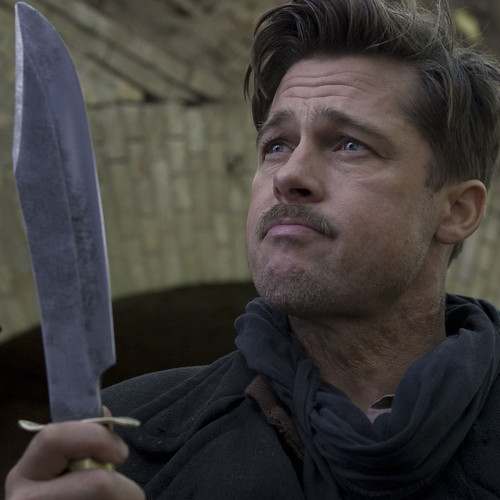
In Inglorious Basterds, his latest flick, there's a close-up of a bowl of cream while a conversation is taking place over a dinner table. The close up used in this style has become one of the Tarantino trademarks along with the trunk shot, and long, lingering takes. However, the difference is that before, Tarantino was using these embellishments to drive the story forward, to provide a different take on familiar situations and to render anticipation in the viewer's mind. Now he seems to include these begrudgingly in order to make the film seem his. Quentin Tarantino is trying too hard to make a Quentin Tarantino film. One doesn't feel that he creates films by an organic process anymore, but that he sits at his desks discussing scripts thus: "Ah yes, we'll have a trunk shot there....then in the next scene, that'll have a femme fatale in...oh and throw in a mexican standoff"


Tarantino's dedication to homages and tributes has, as above, turned from witty referencing to cloying and tiresome. In "The Good, the Bad and the Ugly" each major character is accompanied by a little vignette, and a freeze frame outlines their respective characters as "The Good" "The Bad" and "The Ugly". Tarantino creates an obvious tribute to this in Inglorious Basterds, outlining the various Basterds in these small onscreen character profiles. Whereas in Sergio Leone's western, these depictions are used to good effect, to set up the story, under Tarantino's clumsy direction, they become tiresome. Eli Roth's character is introduced as "The Bear Jew". I was expecting a monster colossus of a man. Instead we get Roth, hardly well built,  wielding a baseball bat. Are we expected to find this clever, amusing or fearsome? It ends up being none of these.


In the aforementioned first three films by Tarantino, he used his knowledge of trashy cinema, integrated with snappy dialogue and cartoonish violence to create films which were exciting, humourous and unpredictable. He has failed to achieve this in any of his films since Kill Bill Vol. 1.


I put forward the argument that a blockbuster like Transformers can be considered superior to Tarantino's  efforts this millennium. It is easy to see the motives of the likes of Transformers, Hancock, Independence Day, et al. Their chief goal is a money spinning enterprise, providing big, dumb entertainment "for all the family". It's an effort to pack as many people into multiplex cinemas as possible to reap the biggest financial award. But, and here's the clincher, have they ever purported to be anything but that? Tarantino's slew of latest films are junk masquerading as high art, and he has struck back at critics deeming them "unworthy" saying they don't understand him. Doesn't that sound a bit like the hormonal teenager whose parents have been honest about their son's "eclectic" musical taste?


The horrible thing is that besides reasoned film critics, his army of devoted fans and sycophantic chat show hosts like Jonathan Ross manage to keep the idea going that he is still the prodigal enfant terrible of American cinema. When you find yourself yawning halfway through a Tarantino film, you have to ask yourself, if he based his early triumphs on keeping the viewer locked in with intrigue and expectancy, once these facets have faded, what does he have left?


Tarantino has run out of ideas. He should take a leaf from the Coen Brothers' book, who manage to create films with their signature stamp on, but can never be said to have created identikit films.


Friday, 23 October 2009

Lancaster bomber


I'd never been to Lancaster until yesterday. In tremendous contrast to my previous post, it seems like a town which ideally, all Northern towns would seek to replicate in terms of atmosphere, beauty and entertainment.

Late Georgian architecture adorns the high street, crowds make their way up and down the tiled pedestrianised area that makes up the town centre. It's refreshing to see so many independent shops on the high street, somehow Lancaster has not yet succumbed to the homogenisation that afflicts other British towns. It has found a way to accommodate high street institutions (Topshop, M&S, HMV) as well as provide an outlet for small business owners. Furthermore it was inspiring to see such niche interests represented; sauntering down the high street I saw advertisements for a Joe Meek themed clubnight and a French film society. I challenge anyone to find similar pastimes catered for in another town of similar size.

I think the secret to Lancaster's beauty is it's ability to effortlessly combine elements of the past with the modern. This collocation never seems contrived, and while the aforementioned shops are prevalent on the high street, they are housed in original shop fronts, their letters embossed in the old stonework. Lancaster's bygone years as a market town means that it has a long history in trade and commerce on a public level. Perhaps this means that it has adapted more readily and comfortably than some of the worn out mill towns in this part of the UK. Despite the architectural eyesore that is Lancaster University (very good academically, but I'm not sure the architect would top many "best in show" lists) it is truly a lovely town to look at. Open country is but a bus ride away, and there seems plenty of cultural investment in the form of the Lancaster Grand Theatre and Lancaster Castle.

While the current levels of poverty would betray the portrait I'm painting (second in Lancashire with regard to "Households accepted as homeless") I still think that Lancaster has a lot more going for it than other places in the region. All it needs is some investment, as currently it lives very much in the shadow of it's noxious Lancastrian neighbouring cities.

Go on, pay it a visit.


Saturday, 17 October 2009

Broken Britain


Moss Side Estate. Greater Manchester. Teenagers huddled on street corners while others ride up and down on bikes outside long deserted boarded-up shopfronts.


The North of England has a tinge of sadness to it. From the gun crime that has dominated estates like Moss Side since the early 1990s to old cobbled town's whose cotton mills have laid dormant for years. This is an area of the UK with so much to give and to be proud of. Brilliant scenery, friendly locals and a refreshing lack of pretentiousness which can't be found anywhere in London.


I didn't fully appreciate how much the rest of the England, and particularly the North, was neglected as opposed to the Capital. I am constantly reminded of this fact by northern friends, but until I jumped ship to move up here I had no idea. Governments past and present have failed these people. A sea of ghost towns have been created by the loss of industry, leaving it wide open to be homogenised by the usual Tesco, McDonalds, et al.


The only southern equivalent to be found are the washed out seaside resorts located on the south coast. With crumbling piers, and sunshine providing the only real source of income, these towns have also been neglected. The fundamental difference between them and their northern counterparts, is that they never had much to offer in the first place.


Consider places like Burnley, Oldham, Rochdale. Once upon a time these milltowns provided a steady source of employment to skilled and unskilled workers alike. Times change, but when we lost the mills, we lost a fundamental sense of community and camaraderie, similar to the Welsh miners. These are towns that are now taken over by greedy property developers, creating a concrete jungle that is more akin to some kind of Gilliam-esque dystopian phantasmagoria. It saddens me more than the lonely seaside resorts, because there was once something beautiful here.


Looking at the redbrick and wonderfully precise York Stone buildings, one is aware of a gold mine of local history. It says a lot about governments past and present that they continually try to embrace the modern in order to improve and maintain Britain's global standing. I think far more respect would be given to them by the people of this country if they instead invested more in nurturing tradition, as well as revitalising local governments which are in stasis and promoting localised issues.


Tuesday, 13 October 2009

Non-breaking news

This is belated. My digital camera refused to work these past few days, but finally, it sprung into action this morning.

I trotted over to Picadilly Gardens in Manchester this Saturday just gone, to see Unite Against Fascism group mount a counter-protest to the English Defence League's protest over "Islamic Extremism".

I was unsure as to what to expect, but it became quite clear early on that it was the old far right in action once more. Banners reading "No More Mosques" as well as jibes towards immigrants could be seen and heard all over Manchester city centre. At one point the EDL and UAF were demonstrating about 10 metres away from each other, and only a massive police presence eliminated the chance of any real trouble.

That said, it was equally frightening and exhilarating to be caught up in such a passionate exchange of views and opinions, with the very real possibility of it spilling over any minute into physical violence. Stop and search, metal detectors, police dog teams and riot squad were all on show in Manchester, with the Northern Quarter all but deserted, police blockades having sealed off most of the main roads coming into that side of Manchester.

This isn't going to be particularly vivacious post, instead I'll let the photos do the talking.


Sunday, 4 October 2009

Red top to the rescue

"Labour's Lost It"

It being the endorsement of that erstwhile bastion of journalistic integrity, The Sun. Last week Rupert Murdoch's flagship publication declared that after 12 years, the red top had finally relinquished its support of New Labour.

By making such a brash statement on the front page, The Sun assumes that their withdrawal will be the final nail in Gordon Brown's coffin. However, the looming general election will be closer than editors at News International imagine.


Murdoch and co. have been in the news quite a lot recently, most notably back in late August when James Murdoch (son of Rupert) gave a lecture in Edinburgh attacking the BBC, declaring it to be a threat to independence of news provision. While he was storming around the stage, I hardly think that Mark Thompson was quaking in his shoes. The BBC is, and will remain one of the best examples of how a broadcasting corporation should be run. One need only hop over the Atlantic and tune into the likes of Keith Olbermann to see how good we have it in the UK. Murdoch's Sky News prides itself on being first with breaking news, often to the point of throwing unsubstantiated quotes onto the screen, so obsessed are they with getting the scoop.

Rupert Murdoch sees himself as an all conquering, Alfred Harmsworth, Lord Northcliffe style character.

I think it's a shame that history seems to have blotted out Northcliffe and his emergence as the first press baron in modern newspaper production. Having created The Daily Mail and Daily Mirror, he subsequently went on to rescue several papers whose sales were in free fall. At one point he owned both the aforementioned newspapers as well as The Observer, The Times and The Sunday Times. He pioneered modern techniques like advertising and headlines, amongst other modern conventions like serialisations and machine operated typesets.

If Murdoch (whose father, interestingly, was mentored by Northcliffe) truly wants to be the Northcliffe of the 21st Century, he a) Better come up with some ideas to revolutionise media quickly (and charging for online content isn't going to cut the mustard) and b) Has to become a lot more pleasant in the process.

Undoubtedly Northcliffe was a difficult man. Rampant expansionism and megalomania contributed to a nervous breakdown before his death, and he was unpopular amongst rival newspapers for his aggressive taste for pioneering new techniques. But could you really forsee Murdoch leaving money in his will to all his employees, as Northcliffe did? Or starting a campaign proclaiming the evils of white bread and the virtues of wholemeal? It was these little eccentricities that gave him the edge that Murdoch lacks.

With his business-like approach to news, Murdoch has no doubt amassed a gargantuan fortune, but none of his media outlets have endeared themselves to the British public like the BBC. The Sun, as the most read newspaper, is still only read by 11% of the electorate. When you turn on Sky News, there is no authority, no sense that the newscaster understands the issues being presented. Instead a garish newsroom which resembles the control room on the Starship Enterprise is hurled before your eyes, which makes the presenters look like Gerry Anderson's cast offs.

We'll see what happens at the polling stations come 2010, if Cameron and Osborne are triumphant no doubt The Sun will be first to accept the plaudits. For now let's just enjoy the fact that News International are faced with a problem that they've never seen, a media world which is changing beyond their control.

Thursday, 1 October 2009

Oh the humanity.

Humanity's sense of self preservation is ironically, only matched by it's ability to create new ways to blow each other apart.

Since the beginning of time, the human race has time and time again been defined by conflict. Whether it be the antics of 1066, the horrors of the Somme or riled captains barking orders into the ears of grunts in 'Nam, the subject of warfare is fascinating to everyone, whether we experienced it first hand or not.

When discussing war, it's very easy to romanticise what is an atrocious and vile part of human nature. The kinship and bond that forms between soldiers under fire is compelling to those of us lucky enough to never be involved in the bloodshed. What seems to be a common trait amongst people who've lived through battles is that they were just trying to get through it, day by day. Humanity's sense of self preservation comes to the fore during this time of danger. Interestingly it's this same sense of self preservation that humanity applies in a less immediate context, that is, climate change.

I have mixed views about this now popular issue. Wading through the reams of publicity and products that are pure tokenism is difficult, and means that sometimes those with pure and well meaning intention are often overshadowed by their more glamourous cousins. I'm referring to the pedal pusher wearing Notting Hill mothers who guilt trip the rest of us by "buying organic" and dressing up little Artemis and Ophelia in 100% fairtrade cotton. They are also the same people driving their 4 x 4's down Kensington High Street, doing their best to smash me off my bike into the kerb and pumping enough odious gases into the air to rival a pre-Thatcher northern mill.

Humanity is threatened by climate change. We dropped a stink bomb down the vest of mother nature, and now the universe is calling us into the headmasters office for a caning. Thus we're frantically scrabbling around to appease him on high (God, Allah, Richard Dawkins, Simon Cowell, whoever you believe in) by saving our planet. Interestingly if all of humanity was wiped out tomorrow, the universe would heal itself, wildlife would thrive and ecosystems would recover to a state that won't have been seen since the first ice age.

So if we were truly selfless we'd give it all up tomorrow. But we're not. We're the young private dodging bullets on the frontline, senses heightened, adrenalin pumping, thinking of nothing more than to batten down the hatches and save our scrawny behinds. So mankind blunders on, trying to find new ways to delay the inevitable. We're all going to hell in a handcart, and my children's children's children's children's children's children's children's children's children's are going to be burnt to a crisp.

Lovely.

Monday, 27 July 2009

Gregg Wallace is an idiot

The title says it all really.

He's exactly the type of nouveau-riche fool who I fully expect to take up residence in greater London in some sort of ostentatious mansion, but not to actually be in the media spotlight.

The fact that this man is employed, is frankly, offensive. I can't get over how massive his head is.
Seriously, it's huge. Not only is it huge, but it looks like someone has got a face the size of a room, then tried to squash it down to normal size. Yet still failing, because his face looks like it's fighting to burst out, and go on a killing spree or something.

Anatomy issues aside, the man is a complete scumbag. Whilst undertaking some investigative journalism (i.e. donning a parka, adopting the walk of a rambunctious young lad and generally looking like a bit of an idiot) I quizzed some stall owners at Covent Garden Market about their history with the above named Mr Wallace.

Wishing to remain anonymous (presumably because Wallace runs a militant arm of Masterchef, who come round your house and scream in your face that "COOKING DOESN'T GET ANY HARDER THAN THIS" repeatedly, until you're a sobbing wretch), I was surprised to hear a range of different views from stallholders.

They ranged from a simple "what a tosser", to: "He still owes me money, if he ever came down here again, he'd be lynched".

So it's not just me then, clearly. He should be ousted from his post at the BBC, ordered to pay back all the money he owes to various stallholders, and replaced with a younger, less aggressive type on Masterchef. I was thinking someone who possesses a rakish charm, a philandering sense of self and a passion for cooking that would make Delia look like a Little Chef employee. I am of course, talking about myself, I'm the obvious candidate, so hi Mark Thompson, if you've any sense, sign me up.

Tuesday, 16 June 2009

Shape of things to come, part II

Lack of scribblings of late. This has been due to me being on a roadtrip in America, so sorry about that. But not that sorry, because it was incredible. Anyway, I might be taking a break from the whole blogging thing for the time being, maybe until September anyway. I have a film to make and a screenplay to pitch, so most of my time is going to be spent pursuing that. I'll most likely keep you up to date from time to time about how the whole thing it's going. At the very least we'll be showing the film at a few coffee shops around London, at the most we may even get a screening at one of the Picturehouse cinemas in London, in which case I'll be inviting anyone I bump into to fill up seats. Ciao for now, not that anyone reads this shit.

Monday, 11 May 2009

Sub prime steak

Just thought I'd weigh in on the ridiculously over-emphasised and boring topic that is the economic crisis.

It's difficult to understand the logic that led to an enormous economic downturn. Of course, it was primarily driven by greed, and the need to constantly up the risk factor in order to reap the rewards. I know very little about economics. What I do know, is that the banks' strategies were always madness. New Labour further encouraged this culture of high risk lending, partly because City Boys have been in and out of Downing Street for 10 years, on the basis of donations, but partly because they believed that this was one area of industry which might just work, no questions asked, without regulation.

I am loathe to delve into specifics here. While there are a myriad of reasons and theories about why the economy went belly up, (sub prime market lending and endless amounts of other financial jargon) as I've already mentioned, it was all inevitably caused by increasing greed. I have a bone to pick with building societies that turned into banks too. The behaviour of banks is now to lend more than their asset base. HBOS changed the business model from an old-fashioned, slightly boring banker who gave you some money and then lent some money to someone who might pay it back, to someone who decided that leverage was a cool-sounding word and borrow several times what the bank owned, then lend it to anyone!

When there was a remarkable shift from the slightly jaunty, thrifty "credit crunch" to a more serious economic downturn in September 2008, Gordon Brown said "I've been worried about this for a long time". REALLY? Which British politician opened the Lehman Brothers building in the City in 2004, saying: "Lehman Brothers is a great company. Let me thank you for the privilege of being here, I look forward to its future" It was Gordon Brown. That's what happens when you are complacent in the face of recklessness and greed, and you don't realise that markets are not moral, they're amoral, that’s why you regulate them. What's so stunning here is that I'm no economist, yet I am flabbergasted at the ridiculous nature of the situation. One can't punish the banks too heavily, because after all, it's our money that they rely on. The Catch 22 is that we need them as much as they need us, thereby to a certain extent they can afford to do what they want.

Still, it's not the end of the universe just yet.

Monday, 27 April 2009

Oh dear.

Sunday afternoon. South East London.
As I didn't have much to do I decided to go to the cinema, where Greenwich Picturehouse do matinees for a fiver.

After the film (Shifty, excellent), I popped into the toilet for a cheeky piss. As there was virtually no one in the cinema, I was looking forward to the moment of quiet reflection one can get from standing alone at the urinal.

Or so I thought.
A noise which can only be described as a cacophony made itself known from one of the cubicles. Think the beach landing from Saving Private Ryan.

I paused for a moment. "Oh God, it's someone having a fit of internal combustion in the cubicle, and he doesn't know I'm in here, so won't show any restraint." I had to act fast, to let him know that I'm here. I softly reached over to the door, and pulled it open, letting it slam back against it hinges, denoting that someone had entered the room.

Silence.

Brilliant. It's worked, I thought. Now all I need to do is wash my hands before..."PLOP PLOP PLOP!".
Oh no, he's still doing it. He knows I'm here, yet he continues! Suddenly I becamse painfully aware of the sound of toilet paper being used, trousers being pulled up. I've got to get out of here. There's no way I can look the man who provided the sound effects for Platoon in the eye. But it's too late. The cubicle door is opening, he's approaching the sink.

Silence.

"Nice day today isn't it mate?" he pipes up.

"Yeah, nice and sunny I guess" I awkwardly reply.

"Nice and quiet after the Marathon"

You have got to be shitting me.

With that I was out the door, running down Greenwich High street in the vain hope that I'd find something to take my mind off things. You just don't want that on a Sunday Afternoon.

Monday, 20 April 2009

Skiving, no doubt.

This post is going to be somewhat brief, mainly because I'm bored at work and dodging the watchful eye of my manager as I write this.

Two of my friends have just left for America, meeting in the former hub of car manufacturing that is Seattle. I'm meant to be joining them soon, flying out to Toronto to explore the East Coast of America. Recently I've got the travel bug, and it's affected my outlook on daily life quite a bit. I love the sensation of strolling around, not knowing where I'm going, looking at the buildings around me. (This same sensation can be easily replicated if you neck 12 shots and then stumble round your local town centre, but never mind) There's something very liberating about travelling somewhere you've never been before. Maybe it's the sensation that you won't bump into any of the reprobates who happen to live on the same road as you, or just rediscovering the child-like sensation of the shock of the new. I'm beginning to be sick of London, having lived here for most of my life. It's nice knowing where everything is, how to best navigate the tube system etc, but it's become boring. I remember the first time I went to Boombox at Hoxton Bar and Kitchen, the amazing feeling I got that I was part of something innovative and exciting. Ever since I've failed to replicate that feeling, in a club or otherwise, London and it's personality have become predictable, much like that sinking feeling you get when a relationship no longer excites you.

So to conclude, I'm looking forward to seeing new pastures in America. Because you see so much of American life through a film lens, you're almost surprised when it actually turns out to be the same as it is "in the movies". Places like New York City take on an almost mythological status, because of the countless iconic films/photographs/books which have used the Big Apple as it's backdrop, and I'm pleased to say that I'll be a part of it soon.